



Sending a hamper through the post is trickier than sending a standard parcel. The gift itself is fragile, the contents shift around inside the container, and most couriers have specific requirements for how the outer needs to be packed. Get any of it wrong and the hamper arrives looking tired at best, damaged at worst.
A reliable postal hamper comes down to five steps: choosing the container, packing the contents, adding protective fill, choosing an outer transit box and picking a courier.
Step 1: Choose your hamper container
The container sets the tone of the finished gift and determines what other components you'll need. Four options cover most postal builds.
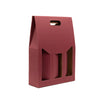
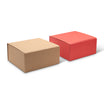
Card hamper boxes are cost-effective and delivered flat-packed, making them easy to store and popular with delis. From front-opening designs to magnetic folding boxes, our card and wooden hamper boxes collection makes great standalone gifts. Pair them with matching outers, and they're ready to ship. Another great option for shipping hampers is card gift trays. When used in conjunction with a dedicated acetate lid cover, they keep contents secure and neatly presented.

Wooden hamper boxes are a step up from cardboard and can be reused time and time again after the contents are gone. They can be personalised and are a popular option for corporate gifting.

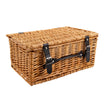
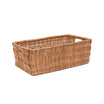
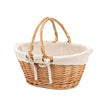
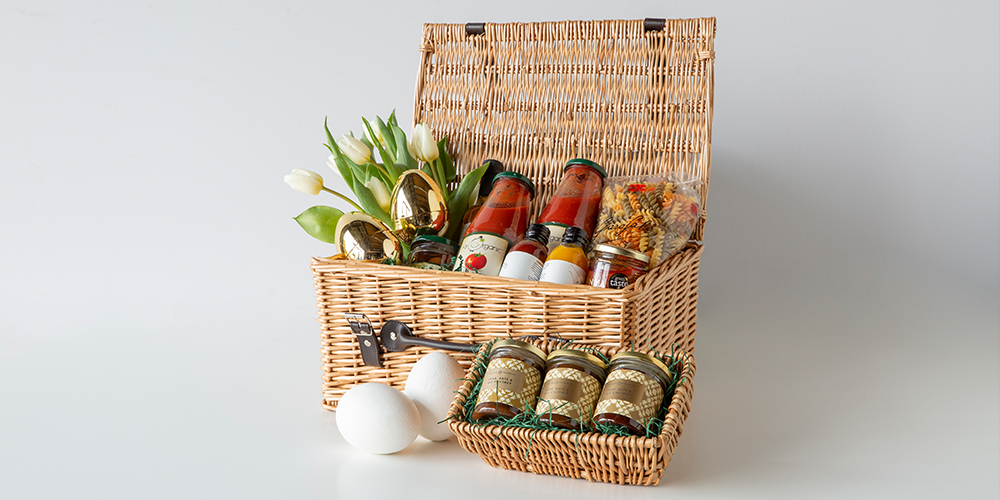
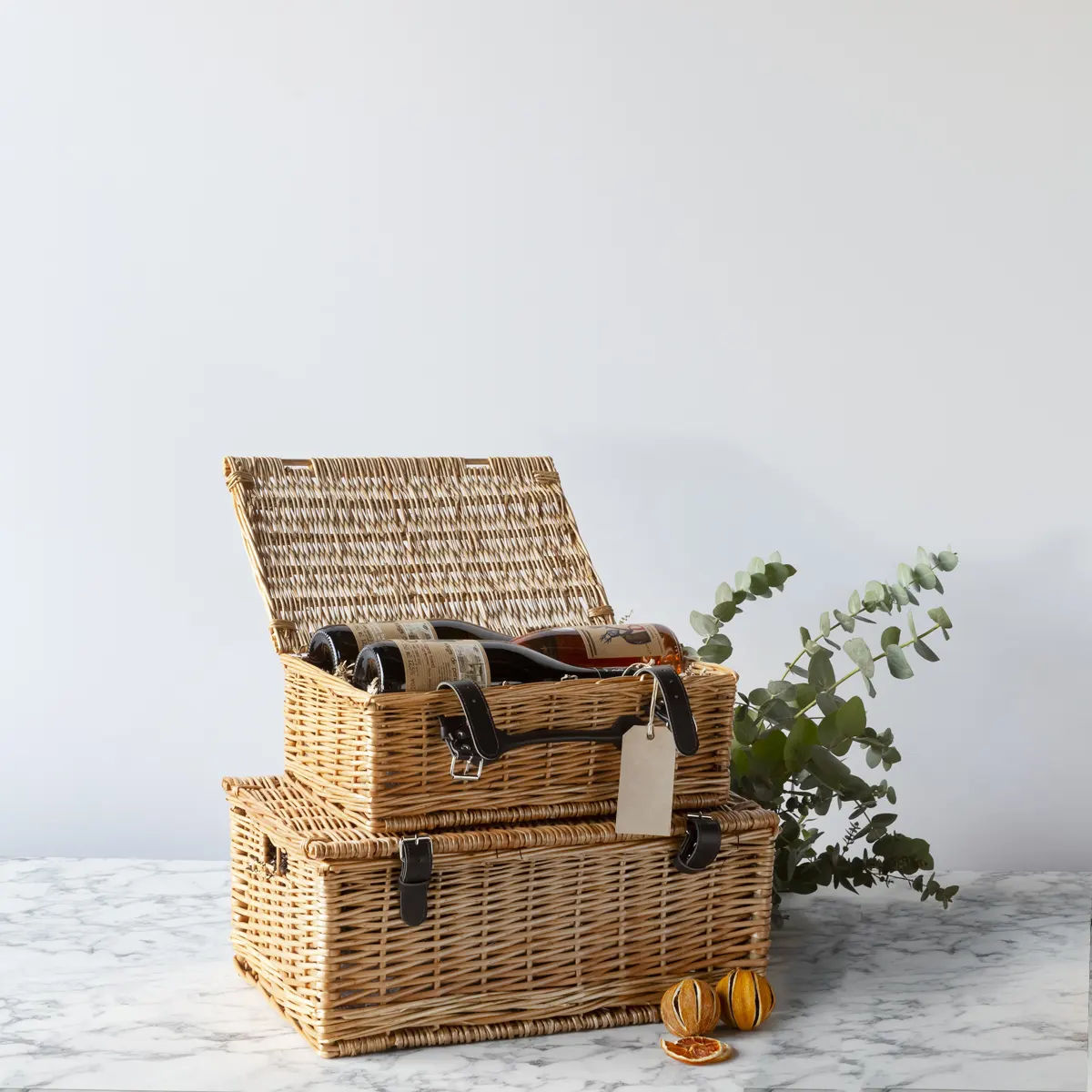
Wicker hampers and baskets are the most luxurious option. Made from steamed autumn willow, they are traditionally used for high-end presentations and drinks gifting. For wicker hampers, the lid is securely fastened to the basket, while wicker trays can be wrapped in cellophane to help keep contents secure during shipping.
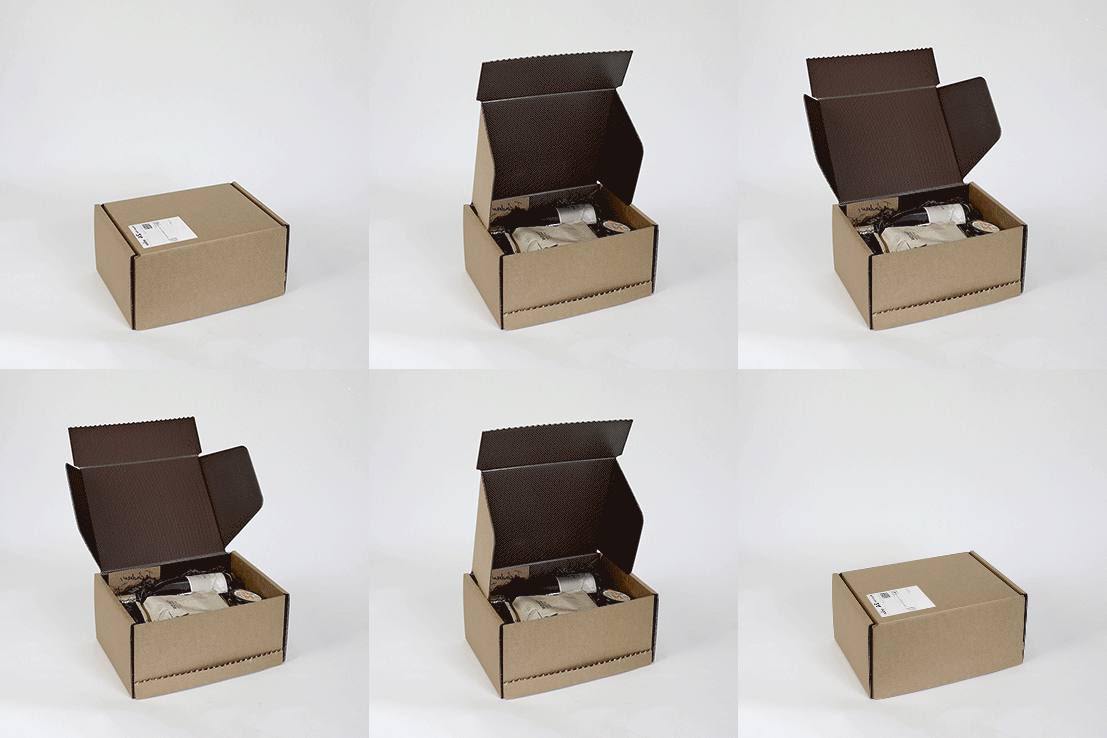
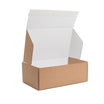
Ecommerce boxes act as both a gift hamper and a shipping box. Delivered flat-packed, they feature a self-seal adhesive strip, allowing customers to simply tear the perforated opening strip to reveal the goodies inside. With no need for an additional outer carton, they're an ideal solution for online retailers.
Whatever container you choose, make sure it's the right size for its content.. An oversized container allows products to shift during transit, while an undersized one can prevent the lid from fitting properly.
Step 2: Pack the contents securely
How you arrange the contents matters just as much as the packaging around them. Place the heaviest items at the base or in the centre of the hamper to keep the weight stable during transit. Fragile items, such as glassware, ceramics and unsealed jars, should be wrapped individually before being packed.
Arrange the remaining items around the heavier products, with smaller and lighter pieces towards the top. The goal is to create a hamper that looks presentable when the lid is lifted and arrives exactly as packed.
Step 3: Add protective fill
Fill does more than look good. It helps prevent contents from shifting during transit. Even a well-packed hamper benefits from shredded paper, wood wool and tissue , with every gap filled to keep products secure.
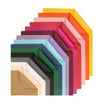
The right choice depends on the look you're aiming for and the volume of the hamper. SizzlePak shred is cost-effective and comes in a wide range of colours. Premium very fine shred elevates the presentation, while wood wool provides a rustic look and works particularly well in wicker hampers.
If you're unsure which fill is right for your hamper, we've written more about choosing the right shredded paper for your hamper.
Step 4: Choose an outer transit box
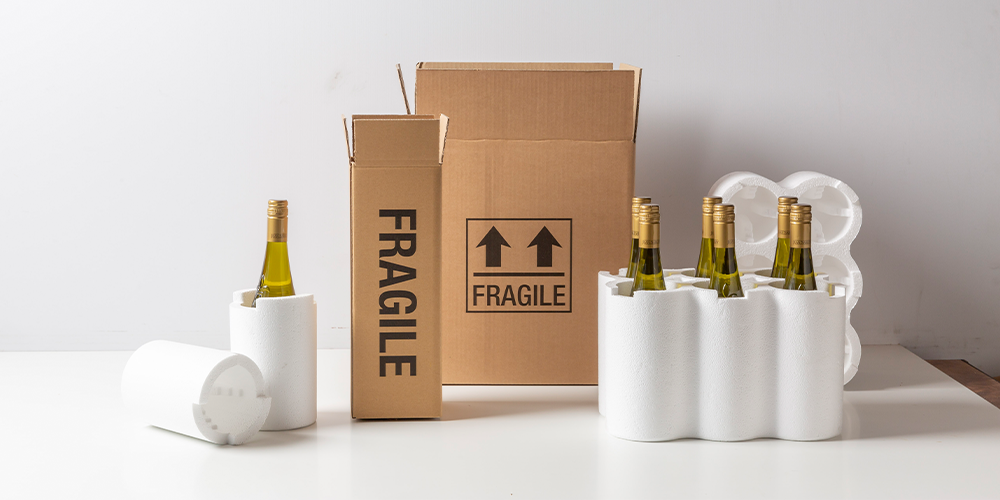
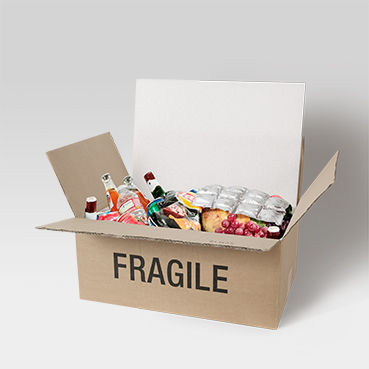
Transit outers are essential for protecting hampers during shipping. By placing your hamper inside a transit outer, you help ensure its contents remain safe and secure throughout the courier network. Delivered flat-packed to save storage space and easy to assemble, our transit outers are designed to match each container.
For subscription hampers, we recommend our ecommerce and self-seal boxes. Versatile and efficient, they can be used either as a cardboard transit outer or as a standalone postal hamper box, reducing the amount of packaging required.
All of our outers and ecommerce boxes are environmentally friendly and can be recycled after use. If your hamper contains perishable goods, we recommend our Sorba-Freeze 24 cell pack. Featuring an insulated thermal barrier, it helps protect temperature-sensitive contents during transit.
Step 5: Pick a courier
While not all couriers accept every type of parcel, with some refusing liquids or perishable goods, Royal Mail, DPD and Parcelforce handle standard hamper deliveries without issue and are among the most popular choices for our customers.
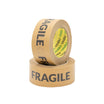
Make sure your box is properly sealed before collection to ensure it is accepted by the courier. Our post on the H-taping method explains the fold-and-tape pattern required by DPD.
To safely send a hamper through the post, you simply need to match the container to the volume of its contents, use void fill to keep items secure, and select the right transit outer. By following these five steps, your hamper should arrive looking as good as when it was packed.
To shop the components featured above, browse our hamper boxes, wicker hampers, shredded paper or protective packaging collections. For advice on a specific hamper build, call our team on 020 7737 4040.
Frequently asked questions about sending hampers by post
What's the best way to pack a hamper for postage?
Start with the heaviest items at the base or centre of the container, arrange smaller items around them, then fill any gaps with shredded paper or wood wool so nothing shifts in transit. Wrap fragile items individually before placing them in the hamper. Once the hamper is packed, place it inside a sturdy outer transit box specifically designed for it.
Can you send food hampers through the post?
Food hampers can be sent through the post, provided the contents are packed with care. Dry goods such as biscuits, chocolates, jams and preserves travel well. For chilled items, we recommend our Sorba-Freeze 24 cell pack, which helps protect temperature-sensitive products during transit.
Can I send alcohol in a hamper by post?
Alcohol can be sent through the post via Royal Mail, DPD and Parcelforce. If you're using another courier, check their restrictions before sending. Always ensure fragile goods are wrapped individually and placed at the bottom centre of the container, surrounded by void fill to help protect them during transit.